
· by Michael Blair, Nashville's Windows & Doors
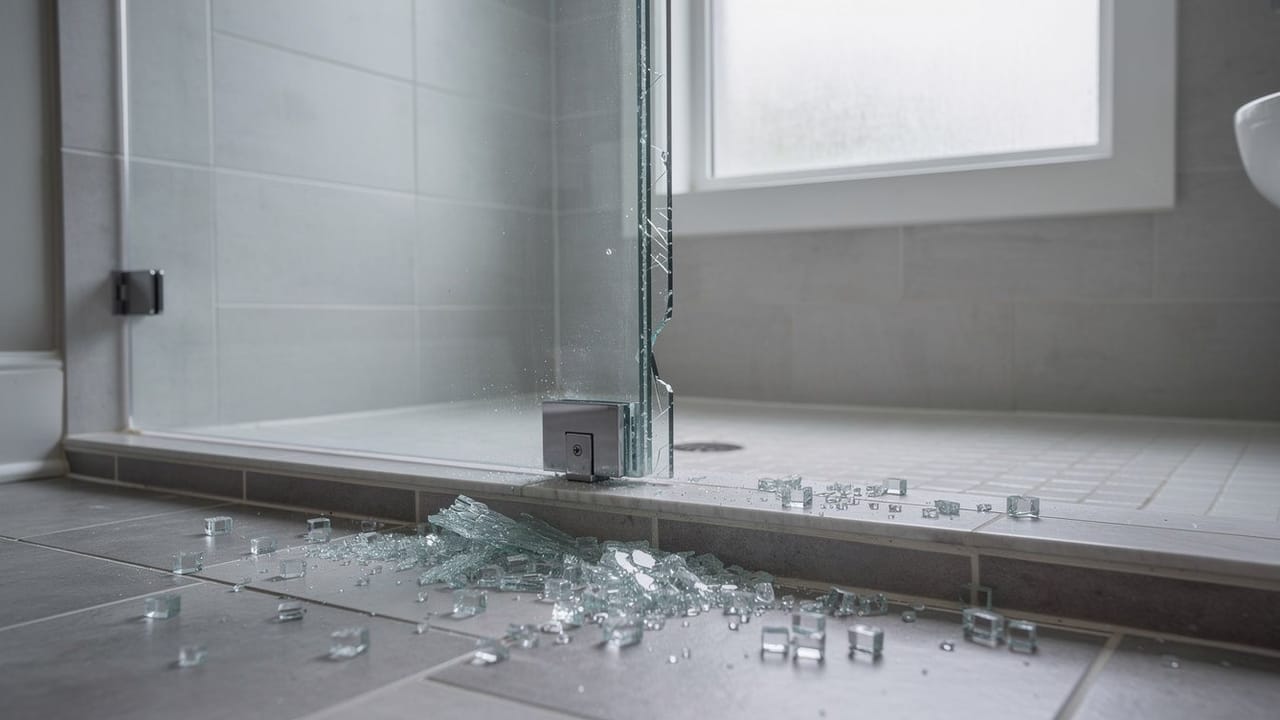
Most people who search for shower door replacement did not break anything. They heard a bang from the bathroom, or walked in to find the floor covered in small glass pebbles and the hinges holding nothing. The first questions are how that happens to glass nobody touched and whether it will happen again, and the next is what the new door has to be. Our glass replacement page covers the service, glass and mirrors cut to measure; this post covers the shower side of it, from why tempered glass lets go to what we look at before a new panel is ordered.
Why do glass shower doors explode with nobody touching them?
A glass shower door breaks on its own because tempered glass is built under stress, and damage too small to notice can release it. The CPSC Tempered Glass Safety Alert says the surface of tempered glass is under pressure and that spontaneous breakage can come from scratches, installation error or other factors. The same alert counts an estimated 2,300 emergency department visits from shattering glass shower doors between 2012 and 2016.
One of the other factors is inside the glass. The National Glass Association’s technical paper on heat soak testing explains that fully tempered glass can break for reasons that include imperfections or inclusions nobody can see, and that most inclusions are stable but some, nickel sulfide most of all, can cause a break when they sit in the part of the glass under tension. A heat soak test may lower that risk, the paper says, but it will not remove it, and there is currently no North American standard for the test.
The way it broke is the part that worked. Tempered glass is meant to come apart into small fragments rather than long shards, which is why the floor looks like spilled gravel. That is also why a crack never stays a crack in a tempered panel: once it goes, the whole piece goes.
What to do in the first hour
Keep everyone out of the bathroom in bare feet, pets included, until the floor, the tub or shower pan and the drain have been cleared. Small tempered fragments travel farther than people expect and settle into grout lines and the gap under the vanity, so a vacuum after the sweep does more than a broom alone. If a strip of glass is still held in a hinge or clamp, leave it for whoever removes the hardware rather than pulling it out by hand.
Take photos before anything is thrown away: the empty opening, the hinges or rollers, and any piece that still shows a mark in its corner. The CPSC alert asks people to report shattering glass at SaferProducts.gov, and the photos are what that report, the manufacturer and any warranty claim will want to see.
- Shoes on until the floor, the pan and the drain are clear
- A vacuum after the broom, along grout lines and under the vanity
- Glass left in a hinge or clamp stays put until the hardware comes off
- Photos of the opening, the hardware and any marked corner piece
Does a replacement shower door have to be tempered glass?
It has to be safety glazing, and in practice that is almost always tempered glass. The scope of 16 CFR 1201.1, the CPSC standard for architectural glazing, names bathtub doors and enclosures and shower doors and enclosures among the products it covers, and 16 CFR 1201.4 has those products tested under ANSI Z97.1-2015. The definitions in 16 CFR 1201.2 describe a shower door and enclosure as one or more panels forming all or part of the wall or door of a shower stall, so a fixed panel beside the door counts as much as the door does.
The building code says the same thing from the other direction. In the model text of the 2018 International Residential Code, Chapter 3, as published for Tennessee, section R308.4.5 treats glazing in walls and enclosures containing or facing bathtubs and showers as a hazardous location when its bottom exposed edge is less than 60 inches above a standing or walking surface. Metro Nashville adopted the 2024 International Codes in July 2025; Metro Codes’ announcement of the 2024 adoption says ordinance BL2025-898 covers plans and applications submitted after July 16, 2025. That page does not say which residential edition governs a given bathroom, so Metro Codes at 615-862-6500 is the place to confirm the current rule for an address in Davidson County.
The same definitions explain the wait. Tempered glass cannot be cut, drilled, ground or polished after it is treated without breaking, so a shower panel is measured, cut, drilled for its hinges and finished first, then tempered. Nothing is trimmed on site, which is why our glass replacement work on a shower starts with measuring the opening and the hardware before the glass is ordered.
Can a shower door be repaired instead of replaced?
If the glass is whole and the trouble is a door that drags, drips or will not stay shut, the glass may not be the problem at all. A sagging hinge, a worn roller on a sliding tub door or a sweep that has gone stiff is a hardware question, and it is worth answering before anyone talks about new glass. When the glass itself is chipped at an edge or deeply scratched, that is the kind of damage the CPSC alert names as a cause of spontaneous breakage, and replacing that panel is the safer call.
A shattered panel is always new glass, and the hardware that held it gets a look first. A clamp that pinched the old glass or a hinge that let it sag is a likely suspect, since the CPSC lists installation error among the causes, and a new panel hung the same way can fail the same way. Older houses deserve one more check: a sliding tub door from decades back may carry no safety mark at all, and an unmarked panel is worth replacing even if it is intact. The glass in entry, storm and patio doors follows its own rules, covered in our post on replacing the glass in a door.
We do this glass work across Middle Tennessee, and our Clarksville windows and doors page covers Montgomery County. To start, send us photos for a free estimate showing the opening, the hinges or track, and any corner of the old glass with a mark on it, and we will tell you what the replacement panel needs before anyone measures.
Sources
- U.S. CPSC, Tempered Glass Safety Alert (Publication 1801) — Spontaneous breakage from scratches, installation error or other factors; an estimated 2,300 emergency visits from shattering shower doors, 2012 through 2016; tempered glass breaks into small pieces; report at SaferProducts.gov
- National Glass Association, FB56-18 Heat Soaking Testing of Tempered Glass for Architectural Applications — Nickel sulfide inclusions; heat soak testing reduces but does not eliminate the risk; no North American standard for it
- U.S. CPSC, 16 CFR 1201.1 Scope (Cornell LII) — Shower doors and enclosures and bathtub doors and enclosures are within the safety glazing standard
- U.S. CPSC, 16 CFR 1201.2 Definitions (Cornell LII) — Definition of a shower door and enclosure; tempered glass cannot be cut, drilled, ground or polished after treatment
- U.S. CPSC, 16 CFR 1201.4 Test procedures (Cornell LII) — Glazing tested under ANSI Z97.1-2015
- 2018 International Residential Code, Chapter 3, R308.4.5 (UpCodes, Tennessee) — Model code text: glazing in enclosures containing or facing tubs and showers with its bottom edge under 60 inches is a hazardous location
- Metro Nashville Codes, Metro adopts 2024 International Building Codes — Ordinance BL2025-898; the 2024 International Codes apply to plans and applications submitted after July 16, 2025
FAQ
Shower Door Glass Replacement After It Shatters — questions
Why do glass shower doors explode?
Tempered glass is made with its surface under pressure, so damage can release that stress all at once. The CPSC names scratches and installation error as causes, and the National Glass Association adds inclusions such as nickel sulfide inside the glass. Heat soak testing lowers that risk but does not remove it, and no North American standard governs it.
What do I do when a shower door shatters?
Keep bare feet and pets out until the floor, the shower pan and the drain are cleared, and vacuum after sweeping because small fragments settle into grout. Leave any glass still held in a hinge for whoever removes the hardware. Photograph the opening, the hardware and any marked piece before throwing anything away.
Does a replacement shower door have to be tempered glass?
It has to be safety glazing, which in practice means tempered glass. The federal standard, 16 CFR 1201, covers shower doors and enclosures, and the model residential code treats glass near a tub or shower with its bottom edge under 60 inches as a hazardous location. Metro Codes can confirm which edition applies to a Nashville address.
Can you replace just the glass in a shower door?
Yes, when the hinges, clamps or track that held it are sound. Tempered glass cannot be cut or drilled after it is made, so the new panel is measured to the opening and its hardware, then made to order. If a hinge sagged or a clamp pinched the old glass, that has to be sorted out first.
Can a shower door be repaired, or does it have to be replaced?
When the glass is whole and the door drags, drips or will not close, the cause is often a hinge, roller or sweep rather than the glass. A panel that is chipped at the edge or deeply scratched is better replaced, since the CPSC names scratches as a cause of spontaneous breakage. Shattered glass is always a new panel.