
· by Michael Blair, Nashville's Windows & Doors
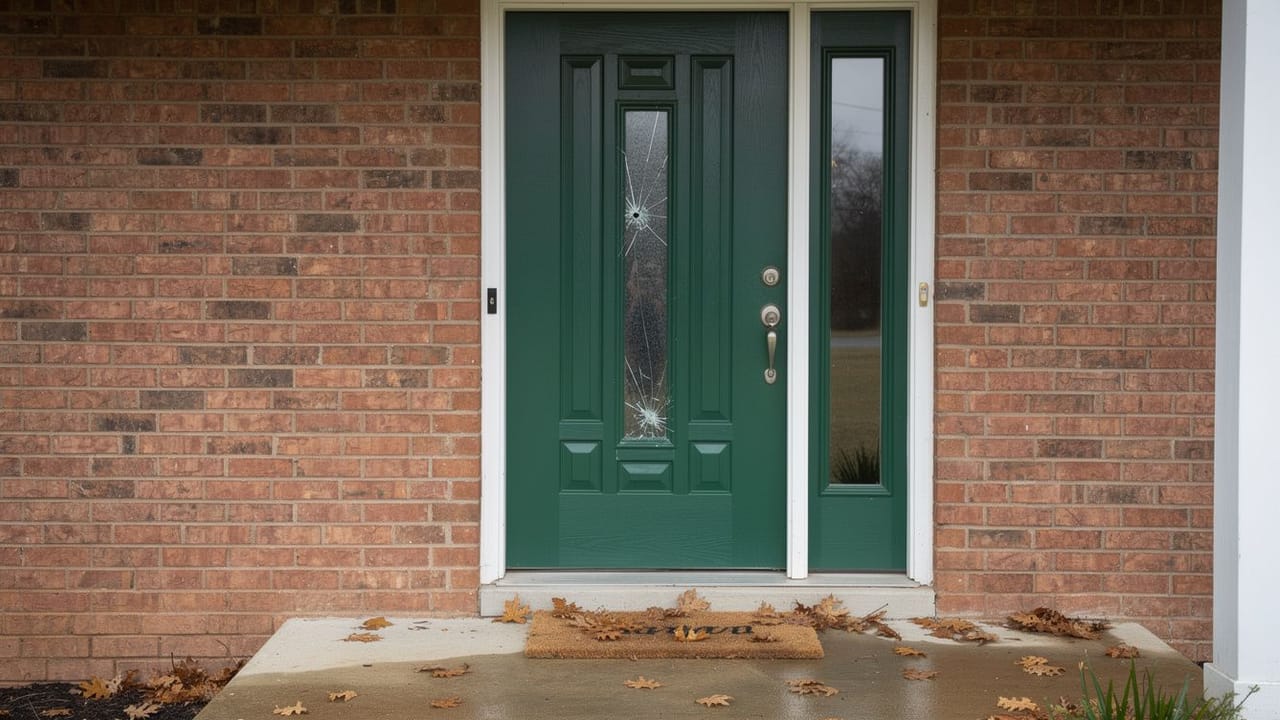
Door glass breaks in a handful of familiar ways: a storm door caught by the wind and slammed against the rail, a sliding door hit by a patio chair, a front door lite that cracks when the door is shut hard on a cold morning. People searching for someone to replace it usually want to know two things, how fast and how much, but the answer to both depends on a step that comes first. Glass in a door is never ordinary glass under the residential code, and the door itself decides whether the fix is a new pane, a new glass insert or a new door. Our glass replacement page covers the service; this post is about how we sort out which of those three a broken door needs.
Why a door is always a safety glazing job
A window only needs safety glass in certain spots. A door needs it almost everywhere. Metro Nashville adopted the 2024 International Codes under ordinance BL2025-898, and Metro Codes’ announcement of the 2024 adoption says the new editions apply to plans and applications submitted after July 16, 2025. The Metro adopted codes list names the 2024 International Residential Code among them, with local amendments.
In that edition the glazing rules sit in section R324. The 2024 IRC Chapter 3 as published for Nashville on UpCodes lists glazing in the fixed and operable panels of swinging, sliding and bifold doors as a hazardous location under R324.4.1. That covers the glass in a front door, the glass in a storm door, both panels of a sliding patio door and the fixed half that never moves. The two exceptions are narrow: an opening too small for a 3-inch sphere to pass through, and decorative glazing.
The glass beside the door is caught too. Under R324.4.2 a sidelight is a hazardous location when its bottom exposed edge is less than 60 inches above the floor and it sits within 24 inches of either side of the closed door. A sidelight that runs down close to the threshold meets both conditions, so when it cracks it is held to the same rule as the door it flanks.
Category I, Category II and the mark in the corner
The safety glass itself is tested to a federal standard. The scope of 16 CFR 1201.1, the CPSC architectural glazing standard, names glazing in storm or combination doors, doors, and patio-type sliding glass doors, among other products. The definitions in 16 CFR 1201.2 split that glass into two impact categories by size. Category I covers doors and storm doors where no single piece of glazing is larger than 9 square feet on one side. Category II covers patio-type sliding glass doors and any door or storm door with a piece larger than 9 square feet.
The IRC points to that test in R324.3.1 and asks for the Category II criteria unless its own table says otherwise. In practice the line between the two shows up when the glass is ordered: a full-view storm door panel or a sliding door pane is a big sheet, and the replacement has to be rated for its size and its place in the door, not just cut to fit the hole.
Whatever goes in, R324.1 asks for a permanent manufacturer’s designation on each pane in a hazardous location, naming who applied it, the type of glass and the safety standard it meets, and it has to stay visible once the glass is installed. A label is allowed in place of an etched mark. Before ordering, look in the corners of the broken pane and its neighbors. That mark tells us what the door was built with, and a door with no mark on any of its glass is worth a closer look before anything is reinstalled.
- Front door lite or half-glass panel: safety glazing, sized to the frame in the door
- Sidelight within 24 inches of the door and lower than 60 inches: safety glazing
- Storm door panel: inside the CPSC scope, and Category II if any piece tops 9 square feet
- Sliding patio door pane: Category II under the federal definitions
New glass, a new lite insert, or neither
On a steel or fiberglass entry door, the glass usually lives in a molded frame that clamps through the door from both sides. When that glass breaks, or when the decorative pattern is simply worn out, the whole frame-and-glass assembly can come out and a new one go in. ODL’s own installation guide for its door glass says its doorglass is made for steel and fiberglass entry doors of the standard 1-3/4 inch thickness, and not for wood entry doors or sliding patio doors. Its sizing rule is to measure the outside edge of the existing frame and take 2 inches off each dimension, so a 24 by 66 inch frame takes a 22 by 64 inch glass. The same page calls for two people to pull the old glass, warns that the inserts are heavy and awkward, and asks for gloves and safety glasses.
On a steel or fiberglass door, whether the house is in Clarksville or Brentwood, a clamp-in frame is the first thing we check for, and our Clarksville windows and doors page covers the work in Montgomery County. A storm door is a different animal: the glass is a removable panel held by the door’s own retainers, and our storm and screen doors page covers when a new panel makes sense and when the frame is too tired to bother.
A wood entry door with a cracked lite is not a drop-in insert, because the glass is set into the door itself, and a sliding patio door is not one either. Replacing the glass in a slider means taking out the panel and having a sealed safety glass unit made to its size, which is part of the work on our patio doors page. If the question is a broken window rather than a door, our earlier post on replacing broken window glass walks through the sash side of the same problem.
When the door should be replaced instead
Glass is the easy part to replace and the door is often the reason it broke. A steel door with a dented or rusted skin at the bottom, a fiberglass door that has split around the lite frame, or a wood door whose bottom rail has gone soft will crack a new pane the same way it cracked the last one, because the slab flexes when it is shut. On a door like that, the honest answer is a new prehung door, and our entry doors page and the comparison of steel, fiberglass and wood entry doors are where that decision starts.
The same goes for a sliding door that has to be forced along its track or a storm door whose closer has failed. New glass in a panel that still slams or binds is money spent on the symptom. We look at the hinges, rollers and frame before quoting any glass, and we say so when the door is the real repair.
Paperwork is the last thing to check. Inside Davidson County the 2024 codes apply to applications submitted after July 16, 2025. Clarksville, Franklin, Murfreesboro and the other towns run their own codes offices and adopted editions, and we have not checked each one, so the town’s codes office is the place to confirm the rules for that address. When you are ready, ask for an estimate and send a photo of the whole door and a close-up of the corner of the glass, and we will tell you which of the three jobs it is before anyone comes out.
Sources
- Metro Nashville Codes, Metro adopts 2024 International Building Codes — Ordinance BL2025-898; the 2024 codes apply to plans and applications submitted after July 16, 2025
- Metro Nashville Codes Administration, adopted codes list — The 2024 International Residential Code, adopted with local amendments
- 2024 International Residential Code, Chapter 3, R324 Glazing (UpCodes, Nashville) — Doors and glass beside doors as hazardous locations (R324.4.1, R324.4.2), the impact test (R324.3.1) and the permanent mark (R324.1)
- U.S. CPSC, 16 CFR 1201.1 Scope (Cornell LII) — Storm doors, doors and patio-type sliding glass doors are within the safety glazing standard
- U.S. CPSC, 16 CFR 1201.2 Definitions (Cornell LII) — Category I and Category II glazing, divided at 9 square feet per piece
- ODL, Install your glass — Door glass inserts for 1-3/4 inch steel and fiberglass doors, not wood or patio doors; frame minus 2 inches sizing; two people to remove