
· by Michael Blair, Nashville's Windows & Doors
When we quote replacement windows, the first thing we settle is not the brand or the glass. It is how the new window goes into the wall. There are two ways: set it inside the existing frame, or take the old frame out and install the new window in the rough opening. The two cost different amounts, look different from the inside and handle water differently, and the Department of Energy’s installer guidance takes a clear position on which it prefers.
How does an insert window differ from a full-frame window?
An insert window goes inside the old window’s frame, and a full-frame window replaces that frame. For an insert, the old sashes, the stops that hold them and any sash weights come out, and the original jambs, head and sill stay in the wall. A new unit, custom ordered to fit the opening that is left, slides in and is sealed to the old frame. The Building America Solution Center’s guide to insert replacement windows calls it a common retrofit in an existing wood frame, used where the sashes are too far gone to repair at a reasonable cost.
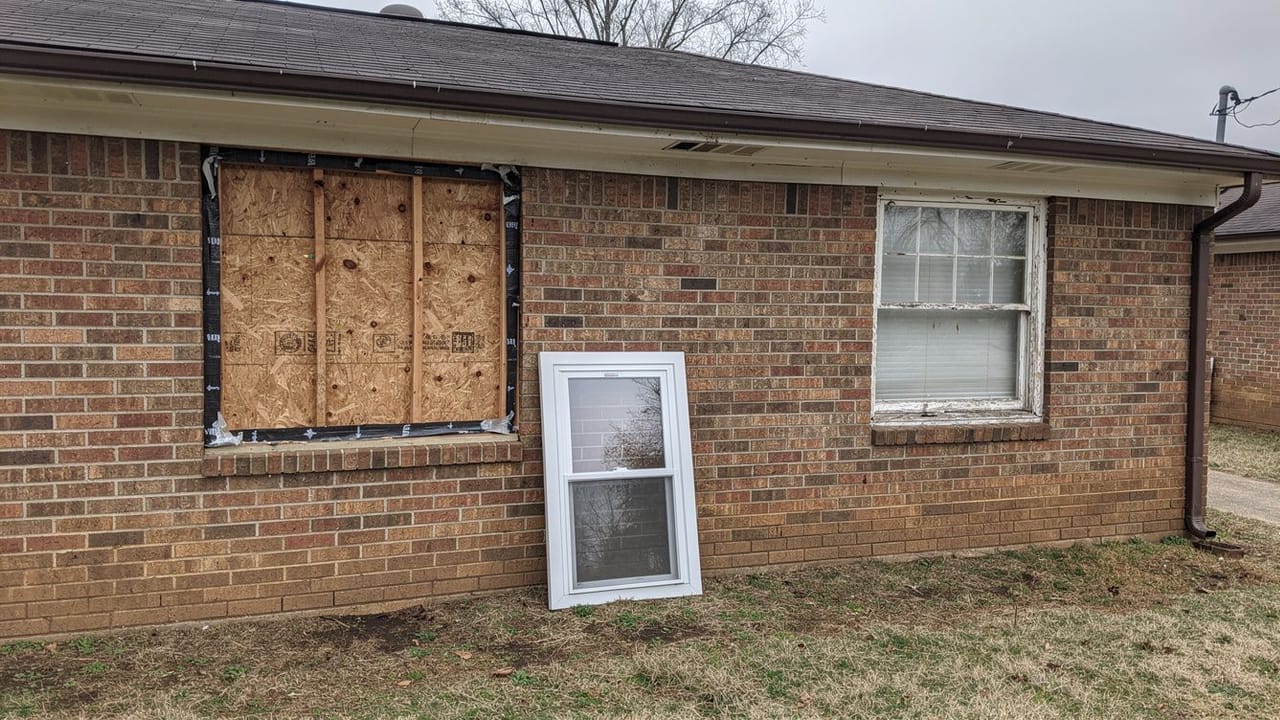
A full-frame replacement removes everything down to the framing of the house. The interior trim and the exterior trim or brick mold come off, the old frame comes out, and the new window, with its own frame, is set in the rough opening, shimmed, fastened and flashed into the wall like a window in new construction. More of the wall is opened, and more of the old trim is replaced or rebuilt, which is why it costs more.
Is a full-frame window replacement better than an insert?
Full-frame is the better installation when the budget and the wall allow it, and the Department of Energy says so. The Building America checklist for window replacement lists two options and marks full-frame as the recommended one.
Once the old frame is out, the opening can be flashed at the head, both jambs and the sill, with the flashing lapped into the house’s weather-resistant barrier, a pan flashing at the sill carried out to the face of that barrier, and the barrier wrapped four inches into the opening. The checklist points to ASTM E2112, the standard practice for installing exterior windows and doors, and it asks for the gap around the window to be filled with non-expanding spray foam or blown-in insulation.
The insert option on the same checklist asks for less. The old opening is cleaned and sealed, the exterior stops are caulked and the insert is sealed to the existing frame, but no flashing is listed, and the checklist warns that the old window may have no pan flashing at all. An insert relies on the water handling the original window already had. If that frame has been leaking at the sill for years, an insert covers the problem rather than fixing it.
Can you replace windows without replacing the frame?
Windows can be replaced without replacing the frame, by setting an insert inside it, as long as the frame and sill are sound. The Building America insert guide lists what that costs you. Each window has to be custom ordered to size. Because a new frame sits inside the old one, the glass area shrinks. The change cannot be undone, and an insert is typically not acceptable for a project in a historic zoning district.
Rot decides a lot of these jobs. The Department of Energy’s weatherization job aid for window installation has the installer clean up the jambs and repair damage before the new unit goes in, and replace flashing as needed. A soft sill or a jamb that has rotted at the bottom is not something an insert should be screwed into. When we find that, we switch that opening to a full-frame replacement, and we tell you before the window is ordered, since an insert and a full-frame unit are not the same size.
What a sound replacement includes, whichever way it goes in
A sound replacement keeps water and air out, and the DOE job aid’s checklist asks for exactly that, verified with a blower door and smoke or an infrared scan when the weather allows. Its sequence includes filling the empty sash-weight pockets of old double-hung windows with low-expansion spray foam, setting the new unit level on shims and fastening it as its maker specifies, caulking the exterior edges, and sealing the gap around the window with backer rod or low-expansion foam. The insert guide adds that the sill should be left to drain to the outside rather than caulked shut.
Older houses add one more step. The same job aid calls for working lead-safe on homes built before 1978, and the EPA’s Renovation, Repair and Painting rule for contractors says window replacement is always covered, however small the job.
How a window ties into the wall outside is the part that decides whether it leaks, and our trim and flashing work covers that detail. If you have a house in Nashville or nearby and are not sure which kind of replacement your frames can take, ask us to look at them.
Sources
- Building America Solution Center (PNNL, U.S. DOE), Window Replacement checklist — Full-frame replacement marked recommended: head, jamb and sill flashing integrated with the weather-resistant barrier, sill pan, barrier extended 4 inches into the opening, ASTM E2112; insert option lists no flashing and warns the window may lack a pan
- Building America Solution Center (PNNL, U.S. DOE), Insert Replacement Window guide — A common retrofit in an existing wood frame; custom ordered to size; reduced vision area; not reversible; typically not acceptable for historic zoned projects; sill left to drain to the exterior
- U.S. Department of Energy / NREL, Weatherization Installer Job Aid 21-1: Window Installation (2024) — Installation sequence: repair the jamb, foam sash-weight cavities, replace flashing as needed, shim and fasten, caulk exterior edges, seal with backer rod or low-expansion foam; work lead-safe on pre-1978 homes
- U.S. EPA, Renovation, Repair and Painting Program: Contractors — Window replacement in pre-1978 housing is always covered by the RRP rule regardless of square footage
FAQ
Insert or Full-Frame Window Replacement — questions
What is a full frame window?
A full-frame window is a replacement that comes with its own complete frame and goes into the rough opening after the old window, frame and trim are removed. Because the opening is exposed, it can be flashed at the head, jambs and sill, given a sill pan and tied into the house’s weather barrier.
What are the pros and cons of full frame window replacement?
The gains are a flashed, insulated and air-sealed opening, a chance to repair rot in the framing, and no loss of glass area. The Department of Energy’s Building America checklist marks it as the recommended option. The costs are more labor, removed trim inside and out, and a higher price than an insert.
Is an insert window the same as a pocket replacement?
Yes, the two names describe the same method. The old sashes and stops come out, the original frame stays, and a new unit sized to fit inside that frame is set in and sealed to it. It is quicker and disturbs less trim, but the glass area shrinks and the old frame’s flashing is kept.
How are replacement windows installed?
Either inside the old frame or in the rough opening after it is removed. In both cases the opening is cleaned and repaired, the unit is shimmed level and fastened as its maker specifies, the exterior edges are caulked except the sill, and the gap is sealed with backer rod or low-expansion foam.
Do insert replacement windows reduce the glass size?
Yes. An insert has a frame of its own that sits inside the original frame, so the visible glass ends up smaller than before. The Building America guide to insert windows names the reduced vision area as a drawback. A full-frame replacement avoids it because the new frame takes the place of the old one.